
Air care covers a wide range of formats: a metered burst for a car or a cupboard, a continuous release for a room, a trigger for a surface. The container behind those can be aluminium or tinplate, and for room products tinplate is often the practical choice.
This page covers the component side of a tinplate air freshener, meaning which actuator suits which usage and what the tinplate body changes. For the body range itself see our tinplate aerosol cans.
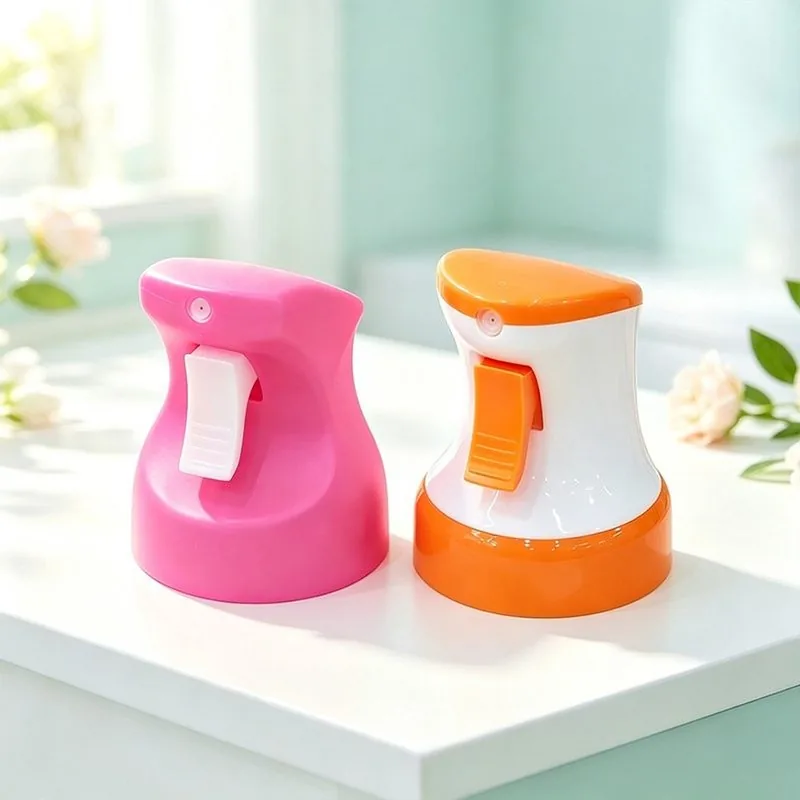
What the actuator decides on an air freshener
| How long each press releases | Valve and actuator Metered burst or continuous release, depending on the usage |
|---|---|
| How far the product travels | Actuator insert The exit geometry shapes how the release disperses into a room |
| How the can is stored | Cap and actuator The actuator face stays exposed if the can is left out |
| What the product touches | Internal coating of the body Settled with the formulation, not by the actuator |
| Body material | Tinplate or aluminium Chosen on cost and product type at conventional pressure |
The pattern is the same as on every other aerosol format: the component above the opening decides how the product behaves in use, and the body decides how much is carried and what it costs. Specifying the actuator after the body is approved is the order that produces a room freshener nobody tested.
Where tinplate fits, and where it does not
- Conventional pressure, so the body need not be the driver. Room fresheners are not high-pressure products, which is why the choice between tinplate and aluminium is usually commercial rather than technical. The high-pressure article covers the formats where the body genuinely is the constraint.
- The coating question is the same on either material. What matters is that the internal lacquer suits the formulation over the claimed shelf life, and that the documentation for that specification exists. See how to read our test reports.
- Components come with the body. The tinplate range is also supplied as bodies with cones, domes, caps and valves, so the body and its component set arrive as one specification rather than being sourced separately.
- The print is the same process either way. Decoration is printed in-house by offset lithography and colour-matched against your approved Pantone reference.
The tinplate range as it stands
| 45 / 52 / 57 / 60 / 65 / 70 mm | Diameter range Cosmetic, household and industrial aerosol products |
|---|---|
| Bodies with cones, domes, caps and valves | Component variant Supplied as a set rather than as bodies alone |
| 1 inch (25.4 mm) | Opening The same standard opening used across the aluminium range |
Because the opening is the standard 1-inch (25.4 mm) crimp, the actuators and valves discussed in the rest of this blog apply here as well. Where a metered burst is wanted, see the disposable car freshener article, which covers that component in detail.
Frequently asked questions
When is tinplate chosen over aluminium for an air freshener?
Tinplate is normally chosen on cost and on how the product is sold rather than on pressure requirements. A room freshener is a conventional-pressure product, so the higher-pressure capability of an aluminium body is not usually needed. What has to be checked either way is whether the internal coating and the component suit the formulation over the claimed shelf life.
What diameters does the tinplate range cover?
The tinplate cans are made in a 45 to 70 mm diameter range, with 45, 52, 57, 60, 65 and 70 mm as the quoted steps. The same range is also available as bodies supplied with cones, domes, caps and valves, so the component set can come with the body.
Which actuator is used on a room freshener?
It depends on how the product is expected to be used. A metered press suits a product that is used in short bursts, while a continuous release suits one that is meant to fill a room. Either way the actuator is specified with the valve as a pair, and neither is interchangeable with the other.
Can the tinplate can be printed with our artwork?
Yes. Decoration is printed in-house by offset lithography and colour-matched against your approved Pantone reference, finished gloss or matt. The print specification and the cap colour are settled together, since the cap is a separate part from the body.
Is the MOQ different for tinplate?
The standard minimum order quantity is 10,000 pieces per size and design, the same as for the aluminium range. Smaller trial quantities can be discussed for a first production run, and free blank samples are available so you can test the component and the discharge.
Next step
Tell us whether the product is a metered burst or a continuous release, the volume and the diameter you have in mind, and we will confirm the body and the component set together, with free blank samples for testing. Start from tinplate aerosol cans, tinplate cans with components, or contact us directly.