
A cleansing foam, a hair mousse and a whipped dessert topping all leave a can that looks like any other aerosol. What separates them from a spray is the component on top: the valve assembly that expands the product, and the nozzle that shapes what comes out of it.
This page looks at that component in detail, the nozzle and the petal cap, and the sizes it is matched to. For the can body itself, including how the food and cosmetic versions differ, see our article on mousse and foam cans.
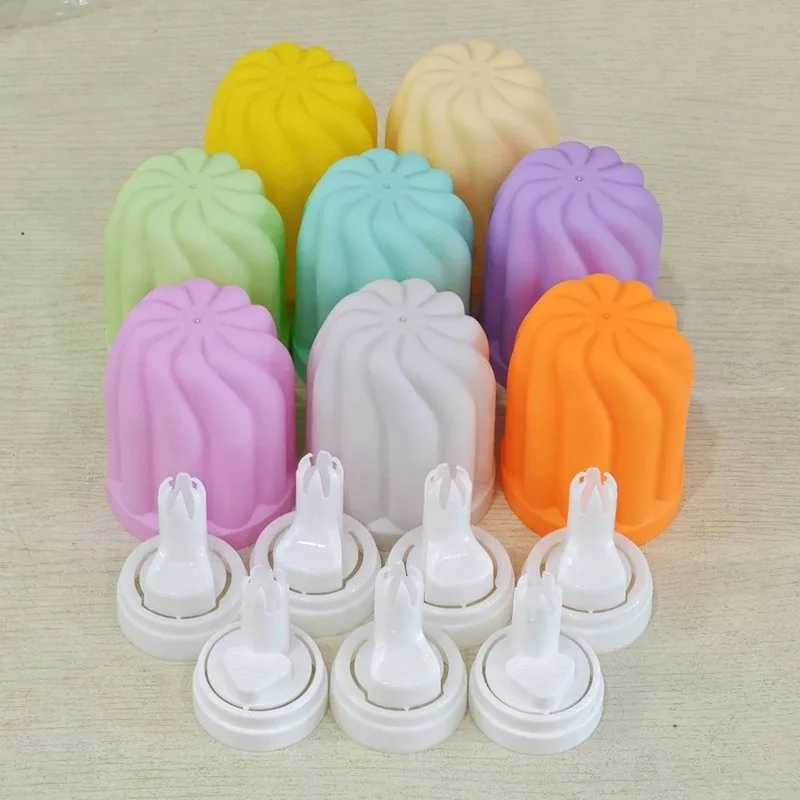
What the nozzle and cap decide
| Foam structure as it leaves | Nozzle The exit geometry shapes the foam; it is chosen with the valve, not afterwards |
|---|---|
| How the can is held | Petal cap and nozzle height The cap sets the pressing surface and where the foam lands |
| Cleanliness between uses | Cap The petal cap covers the nozzle opening when the can is closed |
| Cosmetic or food compliance | Internal lacquer, not the nozzle Food formats need food-grade coating and its documentation |
| Recognition on shelf | Cap colour and can printing Cap and print are separate specifications settled together |
Because the nozzle is small and inexpensive relative to the can, it is often treated as an afterthought, chosen after the body and the print are approved. That is the wrong order. The foam character the user judges the product on comes from this component and the valve above it.
The nozzle, the valve and the body are one specification
- The valve has to be a foam valve. The cream and food foam valves used on these formats are a different assembly from the fine-mist and continuous valves used on cosmetic spray cans, and they are not interchangeable.
- The nozzle is matched to that valve. A nozzle and a valve that were not tested as a pair will produce a different foam from the sample that was approved.
- The body is standard. Below the opening, the 150 ml, 200 ml and 300 ml bodies are one-piece seamless aluminium cans on the same 1-inch (25.4 mm) crimp used across the range.
- Pressure is conventional. A foam format does not need the high-pressure construction used for fire suppression and portable oxygen, and specifying it would add cost for no benefit.
The sizes this component is matched to
| 150 ml | Sloped or round shoulder Cosmetic mousse, facial foam, cleansing foam |
|---|---|
| 200 ml | Sloped or round shoulder Hair mousse, shaving foam, body and shower foam |
| 300 ml | Sloped or round shoulder Cosmetic cleansing and hair foam |
| 300 ml | 53 x 200 mm, food foam Whipped cream, dessert foam, edible oil mousse |
Every size uses the same 1-inch (25.4 mm) opening, so the same nozzle and cap family is available across the range. Where the cosmetic and food versions differ is the internal coating and the documentation that goes with it, not the component geometry.
Frequently asked questions
Why does a mousse need a different nozzle from a spray?
Because the two do different jobs. A spray actuator releases the product as droplets directed at a target, while a mousse nozzle releases it in a shape that holds the foam structure as it leaves the can. The nozzle is chosen together with a cream or food foam valve, and the two are not interchangeable with a spray set.
Can I use one nozzle for both cosmetic and food foam?
The component can be the same, but the specification should not be. Food foam needs a food-grade internal lacquer and the food-contact documentation has to exist for the specification being bought; a cosmetic foam does not carry that requirement. It is the coating and the documentation that differ, not the nozzle geometry.
Do you supply the nozzle and the cap together?
Yes. A mousse nozzle with a petal cap is available as a component, so the valve, nozzle and cap are supplied as one matched set rather than assembled from different sources. That is the point at which most foam projects lose time: a valve and a nozzle that were never tested together produce a different foam from the approved sample.
Which sizes does the mousse nozzle fit?
The cosmetic mousse bodies this range covers are 150 ml, 200 ml and 300 ml, in both sloped and round shoulder versions. The food foam size is 300 ml, which is also made as a 53 x 200 mm edible oil mousse body. All of them use the same 1-inch (25.4 mm) opening.
Can the cap and the can be printed with our artwork?
The can is printed in-house by offset lithography and colour-matched against your approved Pantone reference, finished gloss or matt. Cap colour is a separate specification, so tell us both and we will confirm them together. Standard minimum order quantity is 10,000 pieces per size and design, and free blank samples are available.
Next step
Tell us the foam character you are aiming for, the size and whether the product is food or cosmetic, and we will confirm the valve, nozzle and cap as one set, with free blank samples so you can test the foam with your own formulation. See the mousse nozzle under mousse nozzle and petal cap, the bodies under mousse and foam cans, or contact us directly.